


By Kamil, Founder, MTR Marketing Agency · Last reviewed: 13 November 2026
Saudi Vision 2030 is the Kingdom’s plan to build a diversified economy led by the private sector. For your marketing, it means one thing above all: your customers now search, compare and pay online. Since Vision 2030 was launched on 25 April 2016, internet use has become near-universal, card and wallet payments have overtaken cash, and new sectors such as tourism and entertainment have opened up. For a Saudi business, the website, the Google listing and the ad accounts are now where the Vision shows up in day-to-day sales.
We are a digital marketing agency in Riyadh, and this guide is the plain version we share with business owners who ask, “What does Vision 2030 actually change for me?” Below you’ll find what the plan is, its pillars and goals, the numbers that matter for marketing (each with its source), and the steps we take with clients to turn those changes into enquiries.
What does Saudi Vision 2030 mean for digital marketing?
Saudi Vision 2030 means that digital channels are now the main route to Saudi customers, because the plan has pushed the Kingdom towards universal internet access, cashless payments and a bigger private sector. The Communications, Space and Technology Commission (CST) reported internet penetration of 99.6% in its Saudi Internet Report 2025, and the Saudi Central Bank (SAMA) said electronic payments made up 79% of retail payments in 2024.
Those two numbers change how a business should spend its marketing budget. When nearly everyone is online and most purchases are paid digitally, the gap between seeing an ad and paying gets very short. A customer in Riyadh can find a clinic on Google Maps, read its reviews, message it on WhatsApp and pay a deposit with Mada in a few minutes.
In our work, the practical effect is that every weak link in that chain now costs sales. A slow website, an English-only landing page or a checkout without Tabby or Tamara sends the customer to a competitor who fixed those things. Vision 2030 did not create these habits on its own, but its programmes built the networks and payment systems that made them normal.
What is Vision 2030 in Saudi Arabia?
Vision 2030 is Saudi Arabia’s national transformation plan to reduce the economy’s reliance on oil, grow the private sector and improve quality of life by the year 2030. It sets measurable targets across the economy, society and government, and it is delivered through Vision Realization Programs and national strategies, each with its own key performance indicators (KPIs).
Saudi Arabia’s Vision 2030 is built on three pillars, from which 96 strategic objectives branch out, according to Saudipedia. Progress is published every year in an official annual report on vision2030.gov.sa, so anyone can see which targets were met and which sectors are being pushed next.
For a business owner, the most useful way to read Vision 2030 for the Kingdom of Saudi Arabia is as a map of where demand is heading. Sectors the plan supports, such as tourism, entertainment, ecommerce, healthcare and housing, receive investment, new rules and new customers. Their marketing becomes more competitive as a result.
When was Vision 2030 launched and announced?
Vision 2030 was announced and launched on 25 April 2016, when the Council of Ministers approved it under King Salman bin Abdulaziz. The plan was presented by Mohammed bin Salman, then Deputy Crown Prince and Chairman of the Council of Economic and Development Affairs.
Saudi Vision 2030 started that day, but delivery is split into three five-year phases. The 2025 annual report closed phase two (2021–2025). The third and final phase runs from 2026 to 2030, with a focus on speeding up delivery and widening private-sector participation.
That timing matters for planning. The early years were about building institutions and infrastructure; the final phase is about results. For marketers, that means mature platforms, more competitors online, and customers who already expect a fast, bilingual digital experience.
What is a short summary of Saudi Vision 2030?
A short Saudi Vision 2030 summary is this: a plan from 2016 to build a vibrant society, a thriving economy and an ambitious nation by 2030, with less dependence on oil and a bigger role for private business. Everything else in the plan, from tourism targets to digital government, hangs off those three ideas.
The Vision 2030 Saudi Arabia summary we give clients is shorter still: more people online, more ways to pay online, more sectors open to private companies, and more competition for the same customer’s attention. The businesses that do well are usually the ones that plan for that competition instead of reacting to it.
What are the Saudi Vision 2030 pillars?
The three Saudi Vision 2030 pillars are a vibrant society, a thriving economy and an ambitious nation. Each pillar has its own goals, and each one changes customer behaviour in a different way. Here is how we read the Vision 2030 pillars from a marketing point of view.
A vibrant society
Aims for: Culture, entertainment, tourism, health, heritage and quality of life.
Changes for marketing: New spending on events, travel, dining, fitness and leisure, plus campaigns built around seasons such as Riyadh Season and the national days.
A thriving economy
Aims for: Diversification, private-sector growth, SMEs, investment and new industries.
Changes for marketing: More local brands competing online, and more B2B buyers researching suppliers on Google.
An ambitious nation
Aims for: Effective, transparent government and digital public services.
Changes for marketing: Customers used to fast digital service, and rules such as ZATCA e-invoicing that businesses must follow.
A vibrant society: new reasons to spend
The vibrant society pillar has opened whole categories of spending, from entertainment venues to tourism. The Ministry of Tourism’s 2024 Annual Statistical Report recorded 115.9 million tourists in 2024 (29.7 million inbound and 86.2 million domestic trips). That passed the original target of 100 million, and the goal has since been raised to 150 million a year by 2030.
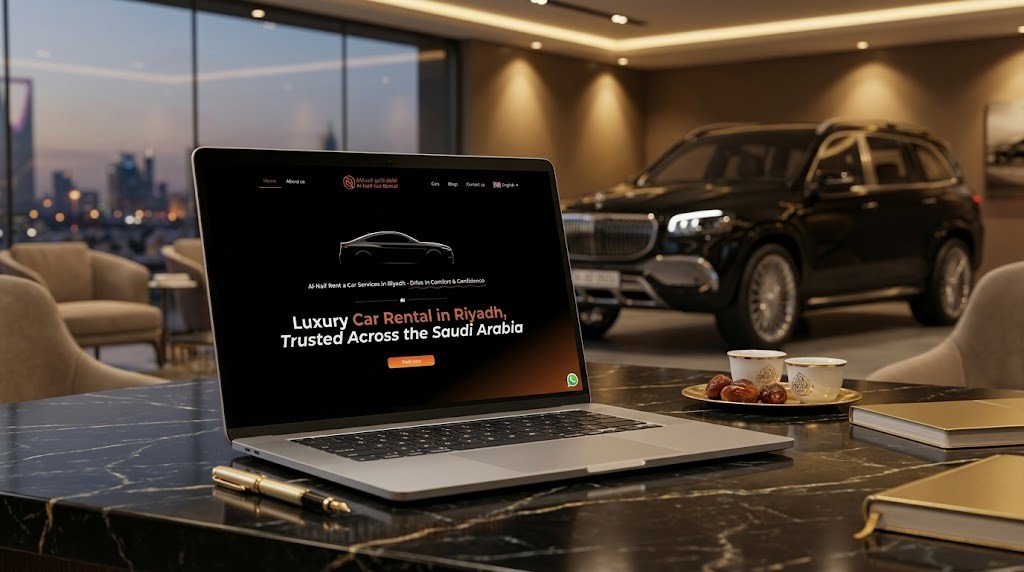
For a Riyadh restaurant, hotel or car rental firm, that means a steady stream of visitors who find businesses through Google Maps, Instagram, TikTok and Snapchat rather than through word of mouth. When we built the Arabic and English website for Al-Naif Car Rental, a luxury car rental firm in Riyadh, we designed it around that behaviour: a fleet showcase, booking enquiries, a WhatsApp button and local SEO, so the business appears when people search in either language.
A thriving economy: more private businesses competing online
The thriving economy pillar aims to grow the private sector and small businesses, which means more companies chasing the same customers. Monsha’at, the Small and Medium Enterprises General Authority, aims to raise the SME contribution to GDP to 35% by 2030. Its SME Monitor reported that total commercial registrations in the Kingdom reached 1.7 million in the second quarter of 2025.
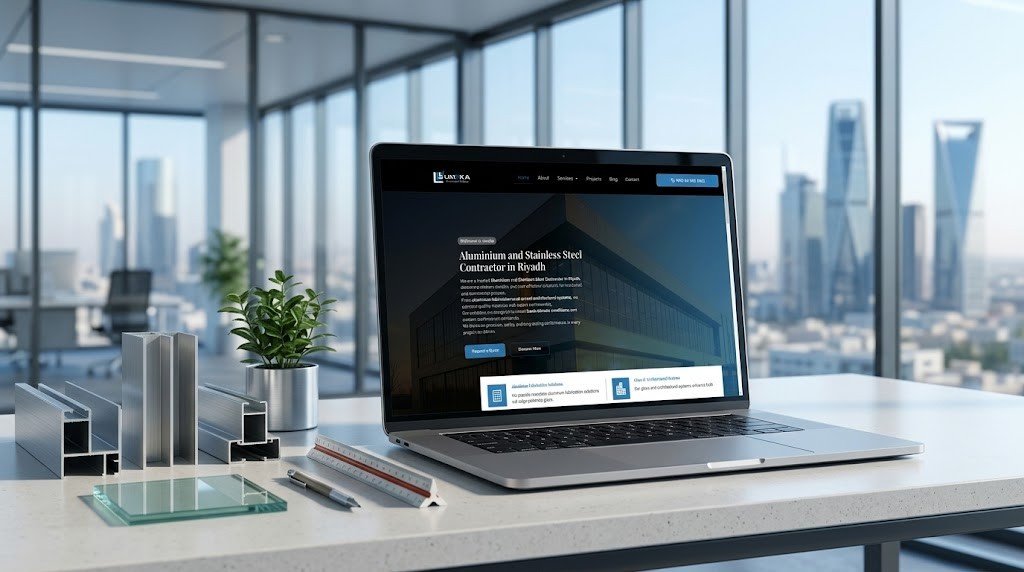
More registrations mean more competitors on Google for the same searches. A contractor that relied on referrals ten years ago now competes with dozens of firms that have proper websites. That was the thinking behind the SEO-led website we built for UMEKA Factory, a Riyadh aluminium and glass contractor: a separate service page for facades, partitions, doors and windows, shutters and skylights, so each service can rank for its own searches.
An ambitious nation: customers who expect digital service
The ambitious nation pillar focuses on effective government, and its digital services have raised the bar for private businesses too. CST’s Saudi Internet Report 2025 found that 96% of internet users accessed government e-services, so your customers already renew documents, pay fees and book appointments online in minutes.
Once people are used to that speed from government platforms, a business that only answers the phone during office hours feels slow. This pillar also brings regulation, such as ZATCA e-invoicing, which affects how online stores and service firms invoice. We build those requirements into ecommerce projects from the start rather than adding them at the end.
Want a marketing plan built around these changes?
Book a free 30-minute call with our Riyadh team. We reply within 24 hours, Sunday to Thursday, and send a written, fixed quote before any work starts.
What are the goals of Vision 2030 that affect marketing?
The goals of Vision 2030 that affect marketing most are the ones that move spending online: a bigger share of modern retail and ecommerce, cashless payments, SME growth and tourism. Each one is a stated Vision 2030 objective or a target published by the government body in charge of it. These are the Vision 2030 objectives we track for clients, with the source for each:
- Retail and ecommerce: the Vision 2030 document aims to raise modern trade and ecommerce to 80% of the retail sector by 2030 (summarised by the law firm Al Tamimi & Company).
- Cashless payments: SAMA reported that electronic payments reached 79% of total retail payments in 2024, up from 70% in 2023, under the Financial Sector Development Program.
- Small businesses: Monsha’at targets a 35% SME contribution to GDP by 2030.
- Tourism: the Ministry of Tourism targets 150 million visits a year by 2030.
The ecommerce goal is the one we see most directly in client work. Ecommerce spending with Mada cards grew 25.82% in 2024 to SAR 197.42 billion, according to SAMA data reported by Finance Middle East. That money goes to stores that load quickly on a phone, show prices in SAR and offer the payment methods Saudis already use.
That’s why our ecommerce builds on Salla, Zid, WooCommerce and Shopify include Mada, Tabby and Tamara at checkout. It’s also why our stores usually go live in about 7 weeks: long enough to set up payments, shipping and tracking properly, and short enough to catch the next sales season.
How will telecommunications and information technology be developed in Vision 2030?
Telecommunications and information technology will be developed in Vision 2030 through partnerships with the private sector to expand high-speed broadband. The original Vision document set a goal of high-speed broadband for more than 90% of homes in densely populated cities and 66% in other urban areas, and it committed to supporting local investment in the telecoms and IT sectors.
The results show in CST’s Saudi Internet Report 2025. It recorded median mobile download speeds of 216 Mbps, average mobile data use of 53 GB per person per month, and 61.3% of users spending seven hours or more online every day. The same report found that 45.2% of internet users used AI tools in 2025, more than double the year before.
For marketing, fast mobile networks raise expectations rather than lower them. When a customer can stream video anywhere, a website that takes several seconds to load feels broken. Heavy, unoptimised pages lose visitors before the first sentence is read, which is why we build fast, mobile-first WordPress sites and check speed as part of every launch.
The AI figure matters as well. With almost half of internet users asking AI tools for answers, a growing share of research now happens inside ChatGPT, Google’s AI results and similar tools. Clear, factual pages that answer questions directly are easier for those systems to understand and quote than pages full of slogans.
Which Vision 2030 projects should marketers know about?
The Vision 2030 projects marketers should know about are the large developments and events that create new audiences: giga-projects such as NEOM, the Red Sea destination, Qiddiya, Diriyah and the ROSHN housing communities, plus major events such as Riyadh Season, Expo 2030 in Riyadh and the FIFA World Cup 2034.
Most small and medium businesses will never sell directly to a giga-project, and that’s fine. The value is indirect. Each Vision 2030 project brings workers, residents, visitors and suppliers, and each of those groups searches online for places to eat and stay, cars to rent, homes to furnish and contractors to hire.
Events work the same way. Riyadh Season 2024 drew 19 million visitors, according to Vision 2030 annual report figures published by Arab News in April 2025. Restaurants, shops and service firms near event areas can plan Arabic-first social campaigns and Google Ads location targeting around those dates, instead of running the same ads all year.
Our advice is to treat each Vision 2030 project as a demand signal for your area, not as a headline. Ask who will be near your business because of it, what they will search for, and in which language.
How far has KSA Vision 2030 come so far?
KSA Vision 2030 has met most of its interim targets. The 2025 annual report, released in April 2026, said 93% of key performance indicators met or exceeded their annual targets and 90% of 1,290 initiatives were completed or on track. It also showed that non-oil activities now make up more than half of the Kingdom’s real GDP.
Some goals moved faster than planned. Besides the tourism target, the 2024 annual report noted that eight Vision targets had already been reached, six years ahead of schedule (reported by Asharq Al-Awsat in April 2025).
Other goals still have a long way to go, and that’s useful to know too. Where the government is still pushing hardest, such as SME growth, local content and the digital economy, you can expect new support programmes, new rules and new competitors until 2030. Marketing plans made today should assume those sectors will get busier, not quieter.
How should a Saudi business adjust its digital marketing for Vision 2030?
A Saudi business should adjust its digital marketing for Vision 2030 by building a fast bilingual website, getting found on Google in Arabic and English, tracking every call and WhatsApp message, and spending on the platforms Saudis actually use. These are the steps we follow with clients, in this order:
- Fix the foundation. Build a mobile-first website in true right-to-left Arabic and in English, with WhatsApp buttons and short forms. Our websites usually go live in about 5 weeks.
- Get found in local search. Arabic and English keyword research, technical SEO, separate service pages and a complete Google Business Profile, so customers find you on Maps.
- Make paying easy. For online stores: Mada, Apple Pay, Tabby and Tamara at checkout, plus ZATCA-ready e-invoicing.
- Track before you spend. Set up conversion tracking for calls, WhatsApp clicks, forms and purchases, so every riyal of ad spend can be judged by its cost per result.
- Advertise where the audience is. Start with Google Ads for people already searching, then use Meta, TikTok and Snapchat for discovery, with Arabic-first creative.
- Plan around the Saudi calendar. Plan social calendars 30 days ahead around Ramadan, Eid, Founding Day (22 February) and National Day (23 September).
The order matters because each step depends on the one before it. Ads sent to a slow, English-only page waste budget, and SEO without tracking can’t show which searches bring enquiries. You can see the full list of what we do on our services page.
What does this look like for different types of business?
The same six steps apply to every sector, but the weight shifts with the business. A B2B firm leans on search and a strong company website; a consumer brand leans on social media.
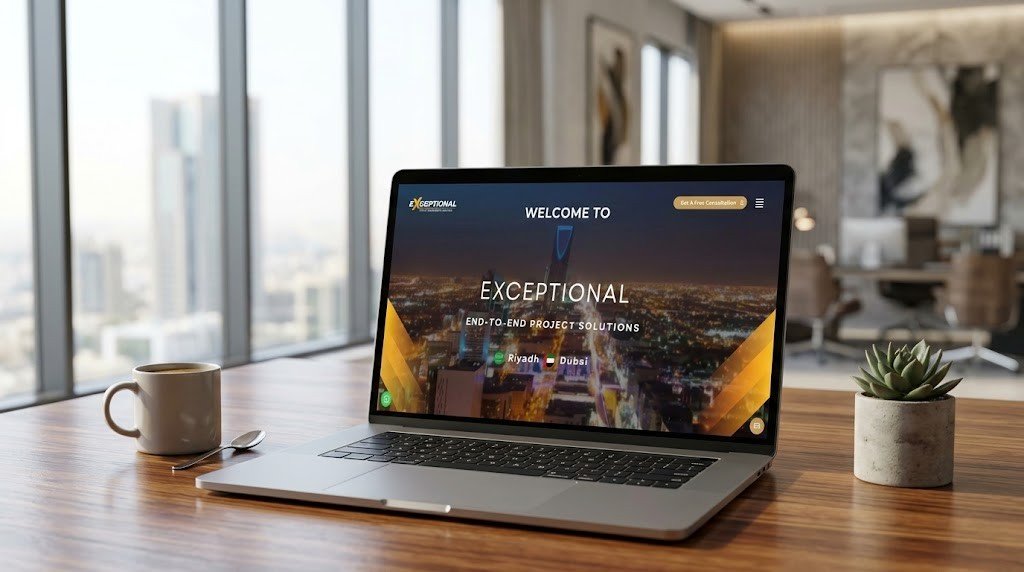
For Exceptional PM, a project management and fit-out firm working in Riyadh and Dubai, we built a corporate website with SEO and lead generation, because its buyers research suppliers carefully before they call. For Alrimaya, a home furniture and appliances brand, the focus was Instagram content, social media management and a logo, because furniture is chosen with the eyes first. For Alnaif Rental, we used Instagram for lead generation, sending interested followers straight into conversations.
Across all of these, we report every month in plain language: leads, calls, WhatsApp messages and cost per result. That report shows a business owner whether Vision 2030’s digital shift is reaching their sales, not just their follower count.
What should you read next?
Our marketing guides for Saudi businesses cover websites, SEO and paid ads in the same plain style. Coming soon: Saudi Online Consumer Trends 2026, on how and where Saudis shop online, and Digital Transformation in Saudi Arabia, on how companies are moving their operations, not only their marketing, online.
For the 2026 numbers behind online shopping in the Kingdom, read Saudi online consumer trends.
For a step-by-step plan for small businesses, read digital transformation in Saudi Arabia: a guide for SMEs.
Vision 2030 and digital marketing: frequently asked questions
What is Saudi Vision 2030 in simple words?
Saudi Vision 2030 is the Kingdom’s plan, launched on 25 April 2016, to build a diversified economy with less reliance on oil by 2030. It rests on three pillars: a vibrant society, a thriving economy and an ambitious nation. Progress is measured through KPIs and published every year in an official annual report on vision2030.gov.sa.
When did Saudi Arabia launch Vision 2030?
Saudi Arabia launched Vision 2030 on 25 April 2016, when the Council of Ministers approved the plan. It was presented by Mohammed bin Salman, who was then Deputy Crown Prince. Delivery runs in three five-year phases, and the final phase covers 2026 to 2030.
What are the main goals of Vision 2030 for businesses?
The main goals of Vision 2030 for businesses are a larger private sector, more small and medium enterprises, a bigger share of modern retail and ecommerce, and growth in tourism. Monsha’at targets a 35% SME contribution to GDP by 2030, and the Vision document aims for modern trade and ecommerce to reach 80% of the retail sector.
Does Vision 2030 make digital marketing more important for small businesses?
Yes, Vision 2030 makes digital marketing more important for small businesses, because customers now find and pay for services online. CST reported 99.6% internet penetration in 2025, and SAMA said 79% of retail payments in 2024 were electronic. A small business without a fast website, a Google Business Profile and tracked ads is missing from the place most buyers look first.
How much does digital marketing cost in Saudi Arabia?
The cost of digital marketing in Saudi Arabia depends on the scope of the work: the number of website pages or products, Arabic and English content, the platforms you advertise on, and your ad budget, which is separate from the management fee. A landing page and a multi-channel ecommerce programme are very different jobs. MTR sends a written, fixed quote after a free call, before any work starts.
Ready to plan your marketing for Vision 2030?
Book a free 30-minute call and we’ll look at your website, search visibility and ads against the changes in this guide. Our Riyadh team works Sunday to Thursday and replies within 24 hours. Prefer to call? +966 56 161 8473.
