


A marketing strategy is the plan that decides who your business sells to, what you offer them, where you reach them and how you will know it worked. This guide shows how to build one for a Saudi business in 2026, step by step, with examples and a template you can copy.
Most Saudi business owners we speak to in Riyadh don’t lack marketing activity. They post on Instagram, boost a few posts and maybe run Google Ads for a month. What they lack is the thread that ties it together: one goal, one clear buyer, and a way to see which riyal brought which enquiry. That thread is the strategy.
What is a marketing strategy, and how do you build one for a Saudi business?
A marketing strategy is your plan for who you sell to, what you promise them, which channels reach them and how you will measure the results; a digital marketing strategy applies that plan online. For a Saudi business in 2026, you build it in seven steps: set one business goal, define your buyers, study competitors, pick the channels your buyers use, plan content around the Saudi calendar, set a budget, and track leads and sales every month.
A digital marketing strategy covers search, social media, ads, your website and WhatsApp. Below we walk through how we build that plan with clients, the same way for a clinic, a restaurant, an online store or a B2B company. At the end there is a simple template you can copy into a document or an Excel sheet.

Marketing strategy vs marketing plan: what is the difference?
A marketing strategy explains why and what: the goal, the audience, the positioning and the channels. A marketing plan explains how and when: the tasks, owners, dates and budget that put the strategy into action.
Think of the strategy as the decisions you rarely change in a year, such as “we target families in north Riyadh who book online” or “we win on WhatsApp response speed”. The plan is the working document that changes every month: this month’s posts, this month’s ad budget, this month’s landing page.
Many templates online mix the two together, and that is fine for a small business. What matters is that the decisions come first. When we see a content calendar with no goal above it, the posts usually look busy but bring few enquiries.
Why does a Saudi business need its own digital marketing strategy in 2026?
A Saudi business needs its own digital marketing strategy because almost all of its customers are online, but they spread their attention across more platforms than in most countries. According to DataReportal’s Digital 2026: Saudi Arabia report (published November 2025), Saudi Arabia had 34.4 million internet users in October 2025, 99.0% of the population, and 38.6 million social media user identities.
The same report shows how wide the platform mix is. Advertising reach late in 2025 was estimated at 38.6 million adults on TikTok, 27.5 million on YouTube, 25.3 million on Snapchat, 18.2 million on Instagram, 17.7 million on Facebook, 15.0 million on X and 12.0 million registered members on LinkedIn. DataReportal notes these are ad-reach estimates, not unique people, but they show one thing clearly: copying a plan written for the US or UK, where Facebook and email often lead, will miss where Saudi buyers actually spend time.
Two more local factors change the plan. Saudi customers often switch between Arabic and English, so keywords, ads and landing pages need both. And many enquiries in the Kingdom arrive on WhatsApp rather than through a form, so the strategy has to count WhatsApp chats as leads from day one.
Step 1: What business goal should your marketing strategy serve?
Your marketing strategy should serve one business goal you can count, such as more booked appointments, more online orders or more qualified B2B enquiries. Followers and likes are not goals; they are signs that something might be working.
We turn the goal into a SMART target: specific, measurable, achievable, relevant and time-bound. “Grow the brand” becomes “get 60 booked consultations a month from Riyadh by March, at a cost per booking we can afford”. That one sentence already tells you which channels matter, which numbers to track and when to review.
If you have more than one goal, rank them. A new restaurant might put walk-in orders first and delivery-app orders second. A Riyadh contractor might put quote requests first and brand awareness a distant second. Ranking stops the budget being spread so thin that nothing reaches enough people to work.
Step 2: Who exactly are you selling to?
You are selling to a specific group of people with a specific problem, and your strategy should describe them in enough detail that you could recognise one of them. We write a short buyer profile for each main customer type: who they are, which city or district they live in, which language they search in, which platforms they use and what makes them hesitate before buying.
For a Saudi business, a few details make a big difference:
- Language: does the buyer search in Arabic, English or both? A clinic in Riyadh usually needs Arabic first; a B2B software firm may get most leads in English.
- Location: a Riyadh service business may only want customers within certain districts, while an online store ships Kingdom-wide.
- Contact habit: many buyers would rather send a WhatsApp message than fill in a form or call.
- Payment habit: for online stores, Mada, Apple Pay, Tabby and Tamara at checkout affect whether a visitor buys.
A good buyer profile also says what the buyer worries about. For a car rental customer, it might be hidden fees; for a clinic patient, it might be the doctor’s experience. Your marketing messages should answer those worries directly.
Want a marketing strategy written for your business?
Book a free 30-minute call with our Riyadh team. We reply within 24 hours, Sunday to Thursday, and send a written, fixed quote before any work starts.
Step 3: What are your competitors already doing online?
Your competitors’ online activity shows you what buyers already see, where the gaps are and how much effort it will take to stand out. We look at the businesses that appear on Google Saudi Arabia for your main searches, in both Arabic and English, and at the brands your buyers follow on social media.
For each competitor we note their offer and price signals, their website speed and clarity, whether they run ads (the Google Ads Transparency Center and Meta Ad Library show this for free), their reviews on Google Maps and the type of content that gets them engagement. Then we summarise it in a simple SWOT: your strengths, weaknesses, opportunities and threats.
The aim is not to copy. If every competitor says “best quality” with no proof, your opening is to show real project photos, a clear process and a fast WhatsApp reply. In our experience, the gap is more often in trust and speed than in price.
Step 4: Which digital channels fit your business?
The right digital channels are the ones your buyers already use when they are ready to act, matched to the goal from Step 1. Most Saudi businesses do best with two or three channels done properly rather than six done halfway. Here is how we match channels to intent:
Search: SEO and Google Ads
Catches people who are already looking, such as “dentist near me” or “website design Riyadh”. Suits clinics, services, contractors and B2B. SEO builds over months; Google Ads management can bring calls in the first week.
Instagram and Facebook
Suit products and services people buy with their eyes: restaurants, beauty, furniture, real estate. Meta ads with click-to-WhatsApp work well because the buyer stays in an app they already trust.
TikTok and Snapchat
Reach large, younger Saudi audiences through short vertical video. Suit consumer brands, food, fashion and events, and need fresh creative every few weeks. See TikTok ads and Snapchat ads.
LinkedIn, website and WhatsApp
LinkedIn suits B2B, with smaller reach but precise job titles. Your website and WhatsApp sit under every channel: if the page is slow or the WhatsApp button is hidden, the budget leaks.
If you’re unsure where to start, ask one question: are your buyers searching for what you sell, or do you need to show it to them before they know they want it? Searching buyers point to SEO and Google Ads; browsing buyers point to Meta, TikTok and Snapchat. An advertising agency in Riyadh can test both with a small budget before you commit.
Step 5: How do you plan content around the Saudi calendar?
You plan content around the Saudi calendar by mapping your offers to the moments when your buyers change behaviour, then filling the weeks in between with useful, regular posts. The key dates for most businesses are Ramadan, Eid al-Fitr, Eid al-Adha, Saudi National Day on 23 September and Founding Day on 22 February, plus your own season (back to school, summer travel, year-end).
We build the calendar 30 days ahead, with content pillars that repeat: proof (projects, reviews, before and after), education (how-to posts and FAQs), offers, and behind the scenes. Each pillar links back to the goal. A clinic might post one patient-education video, one doctor introduction and one booking reminder every week. Our social media management team plans calendars this way.
Two practical points matter in Saudi Arabia. The working week runs Sunday to Thursday, so B2B posts and ads usually perform differently at the weekend. And during Ramadan, activity shifts later into the evening, so publishing times and ad schedules should move with it.
Step 6: How much budget should a marketing strategy have, and how do you split it?
A marketing budget should be set from the goal backwards: decide how many leads or sales you need, estimate what each one may cost on your chosen channels, and then add the cost of the people and tools that run the work. There is no single correct figure, because a Riyadh dental clinic and a Kingdom-wide online store face very different competition.
When you plan the budget, keep two numbers apart. The ad spend is paid to Google, Meta, TikTok or Snapchat and buys reach and clicks. The management or production cost pays for strategy, creative, landing pages and reporting. Mixing the two makes it hard to judge whether the ads or the team need fixing.
The things that move the budget most are the number of channels, the cities you target, how competitive your keywords are, how much new video or design you need each month, and whether your website needs work before ads can convert. If you compare agencies, ask each one for a written quote that separates ad spend from fees. MTR sends a written, fixed quote after a free call, before any work starts.
Step 7: How do you measure whether your marketing strategy works?
You measure a marketing strategy by tracking the actions that bring money, such as calls, WhatsApp chats, form leads, bookings and sales, and the cost of each one. Reach and engagement help explain why results move, but they should not be the headline number.

Before any campaign goes live, we set up the tracking: Google Analytics 4, conversion tracking in Google Ads, the Meta Pixel and Conversions API, the TikTok Pixel, and click tracking on the WhatsApp and phone buttons. Without this, a business can spend for months and still not know which channel brought its best customers.
Then review on a fixed rhythm. We look at ads weekly and the whole strategy monthly, in a plain-language report: leads, calls, WhatsApp chats, cost per result and what we will change next month. Every quarter, we check the strategy itself. Is the goal still right? Is one channel clearly winning? Should budget move?
Marketing strategy examples for Saudi businesses
A good marketing strategy looks different for every type of business, because the buyer, the channel and the moment of purchase are different. Here are four short examples of how the steps above come together.
A clinic in Riyadh
The goal is booked consultations from nearby districts. The strategy leans on local SEO and a complete Google Business Profile, Google Search ads for treatment names in Arabic and English, and Instagram content that introduces the doctors. Every page has a WhatsApp booking button, and calls and chats are tracked as conversions.
A restaurant or café
The goal is visits and delivery orders. Short videos on TikTok, Snapchat and Instagram show dishes and the venue, with a monthly offer tied to the calendar (Ramadan suhoor, National Day). Google Maps reviews and photos are managed every week, because many diners choose on Maps.
An online store on Salla, Zid, WooCommerce or Shopify
The goal is profitable sales. The strategy combines catalogue ads on Meta and TikTok, Google Shopping, retargeting for people who left the cart, and a checkout with Mada, Tabby and Tamara. The main number is return on ad spend, checked against real orders, not platform estimates.
What is a B2B marketing strategy example?
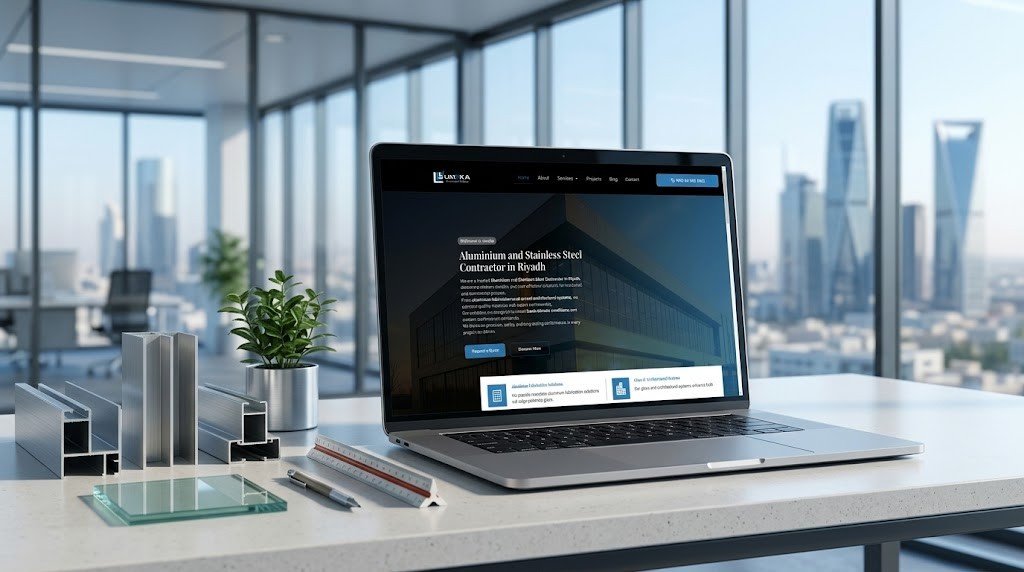
A B2B marketing strategy targets decision-makers and aims for qualified enquiries. It usually uses Google Search for service terms, LinkedIn for job-title targeting, case-study pages that answer buyers’ questions, and a fast reply process. For example, the SEO-led website we built for UMEKA Factory in Riyadh gives each service, from facades to skylights, its own page, so buyers searching for one product land on the right answer.
A simple marketing strategy template you can copy
A simple marketing strategy template has eight parts, and it fits on two pages in a document or one tab in an Excel sheet. Use it as a format to fill in, then review it every quarter.
- Business goal: one SMART target and the date you will review it.
- Buyer profiles: one or two short profiles, with language, location and main worries.
- Offer and message: what you promise, and the proof that backs it up.
- Competitor notes and SWOT: three to five competitors and the gap you will fill.
- Channels: two or three channels, each with its job (find, convince or close).
- Content calendar: content pillars, key Saudi dates and posting rhythm for the next 30 days.
- Budget: ad spend and production or management costs listed separately.
- Measurement: the tracking you need, the KPIs (cost per lead, bookings, sales) and the review dates.
If you keep the plan in Excel, add one row per month with the spend, leads and cost per lead for each channel. After three months, that sheet tells you more about your marketing than any template could.
How MTR builds a digital marketing strategy with you
MTR builds a digital marketing strategy by starting with a free 30-minute call, then writing down the goal, buyers, channels, budget and tracking before any campaign runs. You approve the written plan, scope and cost first, and only then do we start.
Our team in Riyadh works the same Sunday-to-Thursday week as our clients and answers on WhatsApp. We run the channels the plan calls for, from SEO and Google Ads to Meta, TikTok and Snapchat ads, websites and social media management, and we report monthly in plain language. Ad accounts, pixels, audiences and files stay in your name. See all our services.
The strategy behind each project changes with the business. For Al-Naif Car Rental in Riyadh, the focus was an Arabic and English website with a fleet showcase, booking enquiries, WhatsApp and local SEO. For Exceptional PM, a project-management and fit-out firm in Riyadh and Dubai, it was a corporate website, SEO and lead generation. If you want a plan like this, our digital marketing agency in Riyadh can start with a free call. More guides are on our marketing guides for Saudi businesses page.
To fill the plan with real enquiries, see lead generation channels that work in Saudi Arabia.
For how social channels sit inside this plan, see social media vs digital marketing.
To make every channel accountable for results, read performance marketing explained.
Frequently asked questions about marketing strategy
What is a marketing strategy in business?
A marketing strategy in business is the long-term plan for reaching and winning customers: who you target, what you offer, how you position it against competitors and which channels you use. It connects marketing work to a business goal such as sales or bookings. The marketing plan then turns that strategy into tasks, dates and budgets.
What are the 4 Ps of a marketing strategy?
The 4 Ps of a marketing strategy are product, price, place and promotion, together known as the marketing mix. Product is what you sell, price is what buyers pay, place is where they buy it (a shop, an app, a website) and promotion is how you tell them about it. In a digital strategy, place and promotion usually cover your website, search, social media and ads.
How do you make a digital marketing strategy?
You make a digital marketing strategy by setting one measurable goal, describing your buyers, studying competitors, choosing two or three online channels, planning content, setting a budget and tracking results. In Saudi Arabia, add Arabic and English keywords, WhatsApp as a lead channel and the local calendar. Review the numbers monthly and the strategy itself every quarter.
What is a B2B marketing strategy?
A B2B marketing strategy is a plan for selling to other businesses rather than consumers, where the buyer is often a team and the sale takes longer. It usually relies on search, LinkedIn, detailed service pages, case studies and fast follow-up on enquiries. Success is measured in qualified leads and signed contracts, not in clicks.
How long does a digital marketing strategy take to show results?
A digital marketing strategy shows results at different speeds depending on the channel. Paid ads can bring enquiries in the first week once tracking is in place, while SEO usually shows early movement in two to three months and stronger results in months four to six. Social media content builds trust over several months, so judge it on leads and sales rather than likes.
Ready for a marketing strategy built for your business?
Book a free 30-minute call and we will look at your goal, buyers, website and current channels, then send a written plan and a fixed quote. Our Riyadh team works Sunday to Thursday and replies within 24 hours. Prefer to call? +966 56 161 8473.
Written by MTR Marketing Agency, Riyadh. Last reviewed: November 2026. Source for platform figures: DataReportal, Digital 2026: Saudi Arabia (Kepios, 8 November 2025).
